
I recently had the privilege to delve into the story of another human being. Mike (this is not my subjects real name, but it is appropriate to use an alias to craft a flowing narrative) was a joy to interview and I learned a lot from him. I would love to share this story with all of you.
Mike was born in 1949 in the Salt Lake Valley. He was born into very humble circumstances; he lived in a log cabin until he was six years old. Even after he moved out of the log home, the house his father built on the family farm was far too small to comfortably fit a family of eight. He learned how to work hard while living on the farm. Money was scarce when Mike was a child, so if he slacked off on his daily chores his entire family would suffer the consequences. As I talked with him this last week, he was able to remember that his political views were being shaped even in his early childhood.
Mike considers himself to be a mainstream Republican through and through. However, there were a few times in his life when his convictions were far less strong and he almost became a democrat. Political tension was present early in his life. In his early childhood, he remembers his grandma on his father’s side of the family frequently praising the democratic party and the benevolence of the federal government. His grandfather worked in programs created by the “New Deal” of Franklin Roosevelt, and that was how he was able to put food on the table for years. “I remember all the way back to when I was sitting on my grandmother’s lap as a young boy and she told me that the federal government made it possible for grandpa to work,” Mike told me. “The government seemed to me then to be the source of everything good and merciful.”
Despite his grandmother’s influence, Mike kept himself aloof from politics for as long as he could. He told me that he mostly just lived one day at a time on the farm; he had to make sure he helped his family have food on the table. Eventually he did leave the farm though. He attended college where he was also profoundly affected by the democratic party. He recalled that his political science professor was very persuasive. The professor extensively elaborated on all the ways we benefit from the federal government redistributing our wealth. All the things this professor said seemed to make so much sense to Mike and it resonated with what his grandmother had been telling him since his youth. However, he was conflicted. He had worked on a farm all of his life up to that point. He ate and had a house to live in because of his own hard work. He wondered if it was fair that people who didn’t work hard got to reap the benefits of the government’s redistribution of wealth.
He eventually spoke about this inner political conflict with his grandfather (who was Republican interestingly enough, despite his direct dependence on the programs started by the efforts of the federal government). In response to all of the arguments Mike made for the democratic party, his grandfather simply pulled out a copy of the Constitution and read Article I, Section 8. After his grandpa finished reading, he told his grandson that those were the only duties of the federal government. His grandpa went on to say that while taxation is a right that is given to the federal government by the Constitution, if taxation is being used for anything other than the duties stated in the Constitution, it is not right. That was the moment Mike truly became a republican.
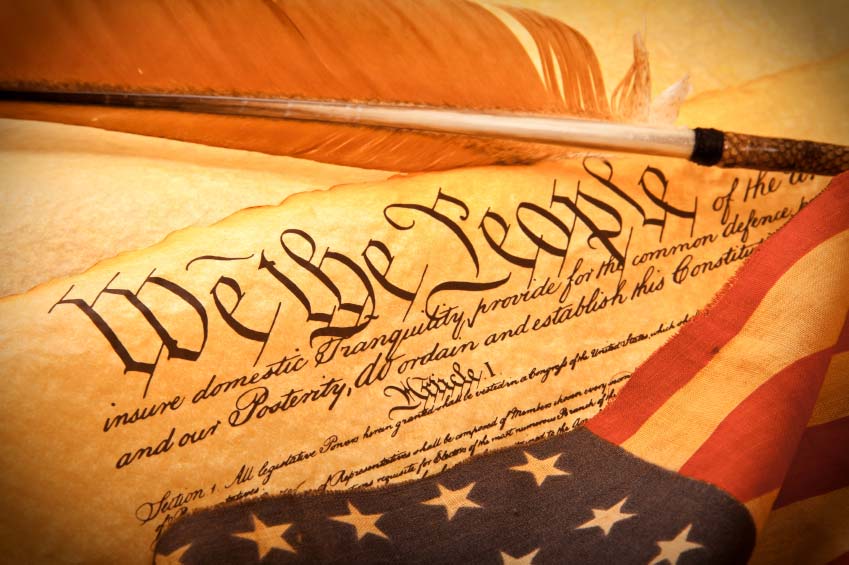
Mike believes that the law of the land is of utmost importance, and the closer the law is to the Constitution, the better off the country is. He has since studied the Constitution to in great depth, and determined that was his grandfather said was correct. He believes that this document was inspired by God. All of his stances on political issues are based off the Constitution. For example, he believes that it is not the federal government’s job to regulate the environment because it is not a duty that is expressly stated in the Constitution.
He believes there is not such thing as situational ethics; the law is applies to every single person in this country. For example, while he thinks that immigration is important, he strongly believes that immigrants have to be legal. They are no exceptions to the law. He also firmly feels that abortions are wrong no matter what. Along with this same theme, when I asked Mike if there was any aspect of his youth that he held dear that he felt was now defiled, he immediately said that importance and sanctity of marriage had been significantly diminished. He said this desecration of marriage has to do with the legalization of gay marriage. He feels that gay marriage is wrong no matter what, and that the federal government does not have the authority to issue licenses such as marriage licenses. He is of the opinion that marriage hardly means anything anymore now that the government has stepped in and meddled with something that shouldn’t have been meddled with.
I think there are a few paradoxes in his thinking. Although a lot of what Mike said made sense to me, there are arguments that he does not acknowledge that can contradict his position. For example, if morals are so important to him, it is questionable that he voted for someone that is largely seen as immoral and disrespectful. Trump is not exactly a saint. So the fact that he voted for someone that does not share his core moral beliefs seems contradictory to me. The environmental paradox that Arlie Hochschild identifies in her book also is relevant in Mike’s situation. The Salt Lake Valley, where he spent the majority of his life, is notorious for being a highly polluted area each winter due to the pollution being trapped by the mountains surrounding the valley. It seems strange then, that he consistently votes for people that won’t fix this problem. My questions I plan on asking next time I talk to him are going to be aimed at understanding in greater depth why he believes the things he does, even if there are contradictions. I hope to learn more about his life as a middle-aged man, where I am sure he had experiences that solidified or made him question his political views.
In the end, I understand the Republican platform far more than I did before. Even more valuable than that understanding however, is the understanding of why people like Mike tend to lean right. I am excited to delve deeper into his story, because I think that I will discover the stories of many others in the process.

 Sander's Anthropology Blog