
Reflection

As I said in my previous blog post, interviewing Mike was an absolute pleasure and an eye-opening experience. My empathy walls were demolished as I got to know Mike better. I am really grateful to him for taking the time to be interviewed and being open and honest about his beliefs. This blog post will be focusing on the ways that I was able to come to a better understanding of the Republican party, and to become a more accepting person though the fieldwork I had the privilege to carry out.

There were a lot of assumptions I had going into this quarter-long journey about Mike and the Republican party in general. For example, I assumed that Mike was Republican because almost everyone in his area of residence (the Salt Lake Valley) is, and that he had been continually indoctrinated with the ideals of the Republican platform since his early childhood. I also had the related assumption that he was Republican because he wasn’t educated about political issues, because surveys show that more educated people tend to be liberal. I was wrong on all of those accounts. I came to find out that he had lots of pressure from his family, primarily his grandmother, to become a democrat. He also was nearly convinced to veer left because of a political science professor he had in college. Mike did enormous amounts of research and reflection during his early life to determine where he stood on the political spectrum. He still studies the Constitution often, and he considers it to be the keystone of his political views.

I think the most powerful assumption I had was that he was simply wrong to think the way he does. This preconceived notion I had was handily eliminated. His explanations of the Constitution actually made perfect sense to me. I could see exactly why he isn’t a fan of a strong federal government: the Constitution doesn’t expressly give the federal government nearly as much power as they have now. I found that most of his arguments were sound and were a lifetime in the making.

That said, I definitely saw the great paradox pop up now and again in his thinking. In our most recent interview, he even acknowledged one of the contradictions that were present in his thinking. Despite numerous financial struggles, Mike has never turned to the government for assistance. He is on social security though. As he was talking about the illegal nature of assistance programs fueled by the federal government, he said “I probably shouldn’t say this because I’m on social security, but social security is illegal because the Constitution does not grant the federal government the power to create programs like that.” So he reaps the benefits of a governmental program, but he is opposed to that very program. The Salt Lake Valley is also notorious for being an extremely polluted area in the winter, but he does not vote for government officials that will help clean up the area that he has resided for all his life. I think the biggest paradox of all has to do with his support for President Trump. As I interviewed Mike, it became very clear to me that his political views are morally based. If Mike has such high moral standards, how could he support a man who publicly disrespects women and has proven to be rather racist? Trump isn’t exactly the most morally straight guy I know of. I find it to be rather contradictory that Mike places such great emphasis on the morality or immorality of political issues, but can vote for someone like Trump.

As I conducted my fieldwork, I found that we agreed on quite a few core principles. For example, one of the main things Mike discussed with me was how divided this country is. I completely agree that this country is hazardously divided, and we both share a conviction that we need to address this division if we hope for this country to survive. He believes that immigration is important for the economy and for the cultural enrichment of our country. I completely agree; the difference in our thinking is not about the importance of immigration, but the manner in which people immigrate. I think that if we all just stopped and took a second to find common ground instead of fighting each other for our differences, we would find that we have a lot more in common with each other than we might realize.

I think the most important thing I will take away from this experience is Mike’s example of how to connect across difference. His two best friends are staunch democrats, but he has a great relationship with each of them. Their political difference actually strengthens their friendship because they are continually showing support for one another even though their beliefs are different. It is easy to accept people that think and act the same as you. Every one does that. The difficult task is to learn how to accept people that are different from us. That is what this country needs. I think we would do well to follow after Mike’s example. It was an honor to do this assignment with Mike as my subject, and I think that this experience will help me seek to understand other people that are different than me in every facet of life.

Mike’s Story

As I drew my fieldwork this quarter to close, I took the opportunity to thoroughly acquaint myself with the deep-story of Mike (again, this is a pseudonym). This involved me focusing far more on basic biographical information instead of just political information. This revised approach did two things for me. First, it made me realize that human beings are political beings. Everything we do is somehow related to politics. Even completely isolating oneself from everyone else to avoid politics is political because it denotes a belief that one’s actions should not be controlled or influenced by others. All human interactions are political actions. The second thing it made me realize is that just learning more about him as a person helped demolish some of my empathy walls. Getting to know Mike on a deeper level has led to deeper findings.

As I mentioned in my last fieldwork blog, Mike grew up on a farm. He didn’t have a lot to say about the actual experiences he had on the farm, but it was as plain as daylight that his time as a young farmer influenced his beliefs a lot further down the road. For example, Mike told me that FDR’s time in office as a very destructive time for the country because of him meddling with things that the Constitution gave him no business to meddle with. When I asked him what specific things FDR “meddled with,” he immediately cited the law that was passed during the great depression that prohibited farmers from feeding themselves or their livestock with their own crops because Roosevelt was attempting to get cash into the market and pull the Nation out of the depression. The discussion expanded to property rights in general, and he said that he felt that people should have the right to do whatever they want with their land. Farmers should be able to drain water out of swampy sections of their land so they can grow crops even if the government doesn’t want them to because it would destroy the natural habitat of certain wildlife and mess with the environment. So although Mike didn’t share any specific stories about his life on a farm, his upbringing as a farmer has really impacted his way of thinking – more than he realizes.

I then asked him about his work experience. Most of my questions led to a political discussion, but this one did not. Was it useless to ask about his work experience then? Absolutely not. Knowing simple things about Mike made his character more three-dimensional to me. I began to see him not only as someone who has political views that are vastly different than mine, but as an ordinary person. Mike’s job is actually pretty cool and I admired him for the work that he did. He develops computers that do menial tasks so people don’t have to waste their skills on something that a computer can do in a fraction of the time (he still isn’t retired even though he is sixty-nine years old). He said that he worked for a photo lab where even the most efficient workers could only process two hundred photos a day, but the introduction of his computers to this business bumped the number up to 1500 photos a day. The company made a lot more money, and the workers were free to work on stuff other than simply processing the pictures. That’s pretty awesome.

I asked him who his friends are, and who he likes to avoid. I asked this question thinking I already had the answer: birds of a feather flock together. I figured that he was mostly friends with republicans, and that he avoided democrats. I was totally wrong. Mike told me that his two best friends were staunch democrats. Discussing politics with his friends is one of his favorite things to do. Mike said: “We discuss philosophies and ideas, not people. We don’t insult each other because we have very different beliefs, we just enjoy the debate.” My respect for Mike went up a thousand percent after I heard that, and I had to inwardly repent for making such a blatant assumption about him. Mike’s friendship immediately reminded me of Sally Cappel and Shirley Slack from the first chapter of Arlie Hochschild’s Strangers In Their Own Land. If some of you don’t recall, Sally and Shirley were best friends that lived on Lake Charles together. Their political beliefs couldn’t have been more different; but their beliefs didn’t get in the way of their friendship. I would submit that their political differences actually strengthened their friendship. They loved each other dearly despite political differences and because of their political differences. I echo Hochschild’s statement that “I believe that their friendship models what our country itself needs to forge: the capacity to connect across difference” (Hochschild 13). I think that Mike’s friendship also reflects what this country needs. In a country that is so divided, we need people like Mike to connect across difference. “I try to get along with just about everybody,” Mike told me. And I believe him.

This actually leads right into the next question I asked him, which was “What do you think the future of America will be?” He told me that the country is more divided today than ever before, and that the division and moral degradation between people and the government will continue to worsen until the country is no more. He didn’t actually quote Abraham Lincoln, but he essentially was saying that “a house divided against itself cannot stand.” Mike proceeded to explain why he thought a divided future was inevitable by looking into the past. He said that when he was a younger man, people in both political parties were united about certain things. He said that abortion was pretty much universally seen as wrong in the past, and that most people agreed that a baby had the right to be born. Now people are incredibly divided about the issue of abortion. Some still maintain that a baby has the right to be born and that abortion is murder, and some say that a woman has the right to do what she will with her body. He said that this division came about because of the moral degradation of the United States. When the country was founded, the Constitution was built on high moral principles and laws. Mike is of the opinion that people just don’t have the same standards as they used to, and this is leading us to an increasingly divisive country.

I alluded to some of his beliefs in the previous paragraph, but abortion is only one of the issues Mike feels strongly about. He also believes that people in the United States almost unanimously stood for traditional heterosexual monogamy in the previous century. Mike strongly believes that homosexuality is wrong, and that same-sex marriage should have never been legalized. He says that the legalization of same-sex marriage has undermined the majority of people who practice monogamy, and favored a minuscule minority. “It’s a ‘tyranny of the minority’,” Mike said, “and the federal government issuing marriage licences is not constitutional.” He also believes that the majority used to believe that marijuana was a gateway drug and should not be legalized. “Now people are giving in to the attractive idea that “we can do whatever we want.’ Do we give in to this popular culture, or do we protect our children from substances that can lead to harmful addictions?” Mike said.

After I listened to Mike talk about his beliefs for some time, I realized that there was an obvious commonality: all of his beliefs are morally based. He believes that the Constitution was inspired by God. He feels the way he does about all of the issues I mentioned in the previous paragraph because of his moral compass. He believes that abortion is morally wrong. He believes the same thing about gay marriage, and homosexuality in general. He believes that substance abuse is wrong. For Mike, religion and politics are closely connected and he believes that God should be at the center of this this country like He was when the Constitution was written. Mike ultimately believes that this country is so divided and that problems are so severe now because the people of the United States are abandoning Christian ideals.

Because of this moral degradation, Mike feels it is his duty to be very outspoken about his beliefs. He frequently uses social media to say where he stands on a particular issue. Mike said, “I always strive to express my thoughts in a way that is firm, but open ended and in a way that allows for further discussion.” He also regularly goes online and discusses his beliefs with others in the comment section on newspaper websites. It’s really interesting to me that Mike feels so strongly about his political stance, but has healthy friendships with people that have very different beliefs, and shares his thoughts in a way that doesn’t try to force people to think the way he does. “I feel it is my duty to speak my mind, and then people can do what they will with what I say,” Mike told me.

So here we have Mike’s story. Mike is 69 years old, and lives in South Jordan, Utah. He is a loving grandfather who deeply wishes for his grand children (he has twenty-seven!) to be grow up in a morally safe country. He has struggled financially throughout his entire life – a lot of that was due to him having eight children – but he never once looked to the federal government for assistance (with the exception of social security). Mike thinks and feels deeply about politics, and he actively uses his voice to try to make the country better. He is a friend to all, even though a lot of his friends have very different political beliefs. Getting to know Mike better has been an absolute pleasure. We may not agree about everything politically, but I see a strength of character in him, and we have become friends that have been able to “connect across difference.”

Story Time!

I recently had the privilege to delve into the story of another human being. Mike (this is not my subjects real name, but it is appropriate to use an alias to craft a flowing narrative) was a joy to interview and I learned a lot from him. I would love to share this story with all of you.

Mike was born in 1949 in the Salt Lake Valley. He was born into very humble circumstances; he lived in a log cabin until he was six years old. Even after he moved out of the log home, the house his father built on the family farm was far too small to comfortably fit a family of eight. He learned how to work hard while living on the farm. Money was scarce when Mike was a child, so if he slacked off on his daily chores his entire family would suffer the consequences. As I talked with him this last week, he was able to remember that his political views were being shaped even in his early childhood.

Mike considers himself to be a mainstream Republican through and through. However, there were a few times in his life when his convictions were far less strong and he almost became a democrat. Political tension was present early in his life. In his early childhood, he remembers his grandma on his father’s side of the family frequently praising the democratic party and the benevolence of the federal government. His grandfather worked in programs created by the “New Deal” of Franklin Roosevelt, and that was how he was able to put food on the table for years. “I remember all the way back to when I was sitting on my grandmother’s lap as a young boy and she told me that the federal government made it possible for grandpa to work,” Mike told me. “The government seemed to me then to be the source of everything good and merciful.”

Despite his grandmother’s influence, Mike kept himself aloof from politics for as long as he could. He told me that he mostly just lived one day at a time on the farm; he had to make sure he helped his family have food on the table. Eventually he did leave the farm though. He attended college where he was also profoundly affected by the democratic party. He recalled that his political science professor was very persuasive. The professor extensively elaborated on all the ways we benefit from the federal government redistributing our wealth. All the things this professor said seemed to make so much sense to Mike and it resonated with what his grandmother had been telling him since his youth. However, he was conflicted. He had worked on a farm all of his life up to that point. He ate and had a house to live in because of his own hard work. He wondered if it was fair that people who didn’t work hard got to reap the benefits of the government’s redistribution of wealth.

He eventually spoke about this inner political conflict with his grandfather (who was Republican interestingly enough, despite his direct dependence on the programs started by the efforts of the federal government). In response to all of the arguments Mike made for the democratic party, his grandfather simply pulled out a copy of the Constitution and read Article I, Section 8. After his grandpa finished reading, he told his grandson that those were the only duties of the federal government. His grandpa went on to say that while taxation is a right that is given to the federal government by the Constitution, if taxation is being used for anything other than the duties stated in the Constitution, it is not right. That was the moment Mike truly became a republican.

Mike believes that the law of the land is of utmost importance, and the closer the law is to the Constitution, the better off the country is. He has since studied the Constitution to in great depth, and determined that was his grandfather said was correct. He believes that this document was inspired by God. All of his stances on political issues are based off the Constitution. For example, he believes that it is not the federal government’s job to regulate the environment because it is not a duty that is expressly stated in the Constitution.

He believes there is not such thing as situational ethics; the law is applies to every single person in this country. For example, while he thinks that immigration is important, he strongly believes that immigrants have to be legal. They are no exceptions to the law. He also firmly feels that abortions are wrong no matter what. Along with this same theme, when I asked Mike if there was any aspect of his youth that he held dear that he felt was now defiled, he immediately said that importance and sanctity of marriage had been significantly diminished. He said this desecration of marriage has to do with the legalization of gay marriage. He feels that gay marriage is wrong no matter what, and that the federal government does not have the authority to issue licenses such as marriage licenses. He is of the opinion that marriage hardly means anything anymore now that the government has stepped in and meddled with something that shouldn’t have been meddled with.

I think there are a few paradoxes in his thinking. Although a lot of what Mike said made sense to me, there are arguments that he does not acknowledge that can contradict his position. For example, if morals are so important to him, it is questionable that he voted for someone that is largely seen as immoral and disrespectful. Trump is not exactly a saint. So the fact that he voted for someone that does not share his core moral beliefs seems contradictory to me. The environmental paradox that Arlie Hochschild identifies in her book also is relevant in Mike’s situation. The Salt Lake Valley, where he spent the majority of his life, is notorious for being a highly polluted area each winter due to the pollution being trapped by the mountains surrounding the valley. It seems strange then, that he consistently votes for people that won’t fix this problem. My questions I plan on asking next time I talk to him are going to be aimed at understanding in greater depth why he believes the things he does, even if there are contradictions. I hope to learn more about his life as a middle-aged man, where I am sure he had experiences that solidified or made him question his political views.

In the end, I understand the Republican platform far more than I did before. Even more valuable than that understanding however, is the understanding of why people like Mike tend to lean right. I am excited to delve deeper into his story, because I think that I will discover the stories of many others in the process.

Remembering Ethics

The code of ethics for fieldwork is the main portion of the central foundation of anthropology. Without boundaries and rules that are followed by all anthropologists that are participating in fieldwork, the quality of information gleaned from this important research method would all be for naught. It is absolutely imperative that these codes are strictly followed to ensure that the natural rights of the subjects are not being violated.

The first standard of the anthropology code of ethics is to Do No Harm. Although all of the codes are extremely important, this is the most essential because all of the other codes of ethics go under this overarching one. In my own fieldwork, following this code will mostly involve protecting the identity of my subject. The information shared is very personal it is the responsibility of the anthropologist to not injure a person by revealing their identity when it is not appropriate. So anonymity will be central to my plan of incorporating the ethics of fieldwork into my own research.

The second standard is to Be Open and Honest Regarding Your Work. Honesty is obviously the key to trust. In order for me to get honest information from my subject, I need to be honest to them about what my intentions are. I plan to do this by clearly outlining the nature of my assignment, making sure that they know that I will be sharing the stories and opinions they relate to me on a public blog, and telling them that the reason they were chosen for my assignment is because they are politically different from me. I will need to be able to balance making sure that I am honest, but also not telling them opinions that will cause them to not be entirely honest with me because they are worried about what I or other people think.

The third code is to Obtain Informed Consent and Necessary Permission. In my own fieldwork, I will definitely need to get permission from my subject to display their opinions and stories on a public blog. This is part of being open and honest and also doing no harm. It would be unethical to share stories that the subject did not consent to me sharing.

The forth standard outlined in the code of ethics is to Weigh Competing Ethical Obligations Due Collaborators and Affected Parties. I know this is really important, but I have a much harder time knowing how this part of the code will be relevant to my research. I would love to hear any thoughts from anyone who might be reading this blog. Since I am only dealing with person, and I do not foresee running into a situation where I would have to weight competing ethical obligations, this standard is not applicable.

The fifth standard is to Make Your Results Accessible. My results will be very easily accessible in this blog. Anyone who cares to read it, and especially my subject, will be able to access all of the information I am sharing. However, to take this a step further, I plan on having my subject read a draft of my blog post before I actually post just to make sure that I have permission (see standard three) and also to make sure they have access to all the results I will be posting.

The sixth and final standard is to Protect and Preserve Your Records. All of my records will be posted in this blog, so they will basically become immortal. Since I am not doing fieldwork in a dangerous place where my notes are handwritten, I do not think that there is anything to protect my records from. Everything will be shared on this blog.

These standards from the code of ethics will be my ally to help me ensure that the rights and needs of my subject are met, and that I am getting good information.

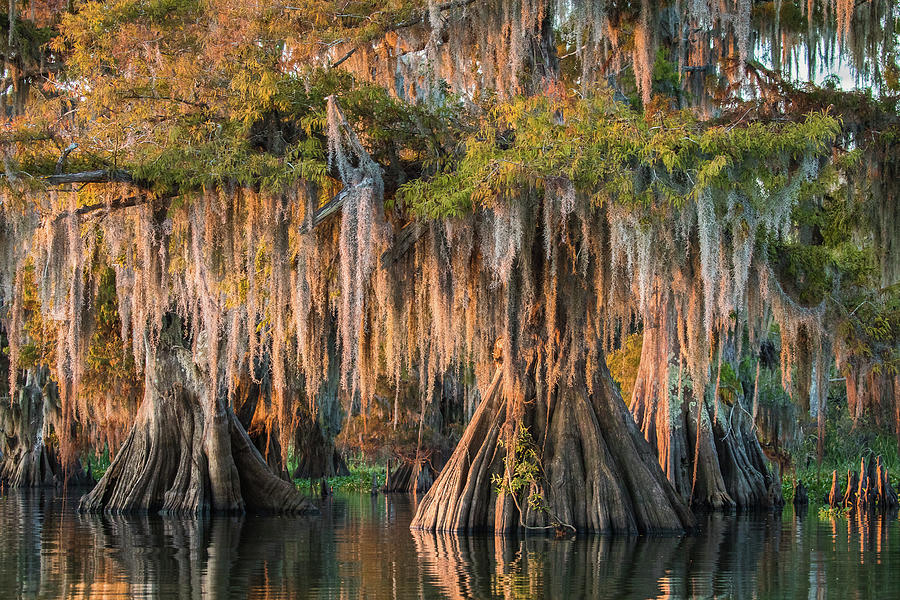
Now to some more interesting stuff from a far more interesting person than me. I chose to read the chapter in Hochschild’s Strangers In Their Own Land called “The Rememberers. The central story in this chapter was that of the Arenos. The Arenos live right off of the Bayou d’Inde, which was once a place vibrant with life, but due to mass pollution from industrialization, the bayou became a place of rot and filth. Harold Areno, an older man who worked as a pipe fitter, begins the tragedy of the bayou by reminiscing about childhood memories of the place. He describes the bayou as it used to be in vivid detail, recounting all of the activities he and his siblings participated in. He showed a few pictures of the beautiful and magnificent bald cypress trees that once stood as ancient protectors of the water. Harold’s words made it clear that he remembered so clearly what the Bayou d’Inde used to be like; before everything wonderful was sucked out of that place.

Harold and his wife Annette Areno now live in a very different world. Big companies near the bayou have polluted the water so severely, that all the grand bald cypresses are dead, all of the fish are poisoned, the water is liquefied death; to put it bluntly, the bayou fell from being a paradise into a polluted hell. The current state of the Bayou d’Inde is the reason why Hochschild is interested in the Areno’s story. She sees the bayou and the people affected by its defiled state as an illustration of the great paradox. It is a great illustration indeed.

Hochschild found that the Arenos repeatedly voted for conservative government officials (being Republicans) even though they knew that they wouldn’t clean the bayou. This was largely because of their firm belief that the candidates they chose were more morally correct. This was evident in the 2012 election where the Arenos voted for Mitt Romney because he supported moral causes that they agreed with despite the fact that they had a perfect knowledge that he probably wasn’t going to make an effort to regulate the pollution of massive corporations.

Reading this chapter was very helpful to me because their were certain concepts that I can form into questions that I can ask my subject. The first would be this: Has there ever been a time where you have voted for someone even though you knew that they weren’t going to be able to fix a really big issue that is affecting you? Why? The second would be this: Is there an aspect of your childhood that you remember being wonderful, but is now ruined because of some political issue? The third on would be: In what ways has the world you remember as a youth changed? I hope these questions lead me to understand my subject’s political stance better. I am excited to ask them and see what that person says!

Anthropology in Action

Hello all! My name is Sander Morrison. Welcome to my blog! I hope you can glean my first blog post for information that will be beneficial to you. My purpose is to be a storyteller for all of you this quarter. This story is not one that any of you have heard or are familiar with. I’m not going to be reciting vivid tales of the extraordinary; quite the opposite actually. I am going to be relating the story of someone who is politically different from me, and maybe some of you. Although that may sound quite a bit less exciting and dramatic than a fairy tale, it is these types of stories that are essential because they ultimately deepen our understanding of others, and even more importantly ourselves.

Arlie Russell Hochschild, author of the book Strangers In Their Own Land and American sociologist, ventured into the beating heart of the Tea Party and a home to millions of people who have a firm stance on the far right of the political spectrum: Louisiana. She was a woman on a mission. She was determined to understand all of these Louisianians whose views completely opposed her own. Understandably, we don’t get a whole account of Hochschild’s findings in the first chapter of her book, but she identifies some important aspects of her fieldwork in Louisiana. This is important for me because I am attempting to do the same thing as her. This first blog post is going to cover some explanations, examples, and purposes of Hochschild’s fieldwork.

One of the first principles of fieldwork that Hochschild introduces is “empathy walls.” “An empathy wall is an obstacle to deep understanding of another person, one that can make us feel indifferent or even hostile to those who hold different beliefs or whose childhood is rooted in different circumstances” (Hochschild, 5). Getting over these obstacles that prevent us from understanding a person in a different culture is the most important thing an anthropologist can do during fieldwork, but this achievement also must extend into everyone’s lives if we hope to live in a world where we understand and accept one another. Hochschild provides a wonderful example of this in her book. Sally Cappel was one of her contacts in Louisiana; she was an artist who lived in Lake Charles, and she was a progressive Democrat. Sally’s best friend, a woman from the same town named Shirley Slack, was on the opposite end of the political spectrum. Despite their differences in political views, these women had an admirable friendship. Said Hochschild about these two women: “I believe that their friendship models what our country itself needs to forge: the capacity to connect across difference” (Hochschild, 13)

Hochschild went into the field with a perplexing dilemma on her mind she called the “great paradox.” The extremely pronounced presence of this paradox in Louisiana was one of the main reasons she chose to center her research there. The great paradox in simple terms is the phenomenon of people voting for or supporting things that are contradictory to their well-being. For example, Louisiana is one of the most polluted states in America, but the majority of the state’s population vehemently opposes government regulation of the environment. This paradox is important in Hochshild’s research because is something that makes it really hard for her to get over her empathy walls. I know I will have to face similar dilemmas when conducting my own research.

One thing that continually eludes reason or science is the way that people feel. This is a common theme throughout humanity. If one is able to diagnose why someone feels the way they do, that person is on their way to understanding that person. The way we feel is at the core of our beliefs. Hochschild calls that core a “deep story.” An example of this is when she is deliberating with a woman named Madonna Massey who claimed to love Rush Limbaugh. Hochshild felt that Limbaugh was “harshly opinionated,” but clearly Madonna felt otherwise (Hochschild, 22) After engaging in discussion with Madonna, she was able to get a glimpse of the Louisianian’s deep story. She discovered that she felt the way that she did because Limbaugh’s commentaries were a wall of protection against the insults that Madonna felt were directed towards her by the far left.

As I eluded to in the previous paragraph, visits or interviews are a really important aspect of fieldwork. Like Hochschild’s experience with Madonna, a person can get to the roots of issues by discovering how people feel about them. By asking good questions that incite a helpful conversation about the issues at hand, one will find that this interviews are very useful for research. One important point that Hochschild makes though, is the fact that her interviews rarely felt like interviews. She remarked that people “often said it was very nice visiting with you” (Hochschild, 17). This is crucial because people feel a lot more comfortable and tend to give more useful information when discussing sensitive topics if they are asked questions in a casual setting where there is still a professional purpose.

Finally, Hochschild discussed the importance of “follow-arounds.” Follow-arounds are exactly what they sound like: it’s literally just following people around. Although this sounds like a simple tool, it is of utmost importance when one is trying to understand a culture; especially one they don’t understand. Hochschild makes it clear that an enormous chunk of political views originates from the culture. So what better way to delve into a culture than by following people around and engaging in their everyday activities? Hochschild’s follow-arounds stood out to me because they are simply a form of participant-observation.

I am extremely curious about what I am going to find while conducting fieldwork this quarter. I am thankful that Hochschild has already gone through a lot of what I am going to be experiencing because I have the wonderful opportunity to learn from her. I am anxious to employ these tools and principles in my own quest to understand a person that is politically different from me.